| Website | Main Data | Information | |||||||||
| Home | Galleries | News | About | By Brand | By Release | Lists | Search | Tobacco | Cigars | Packaging | Brands |
|
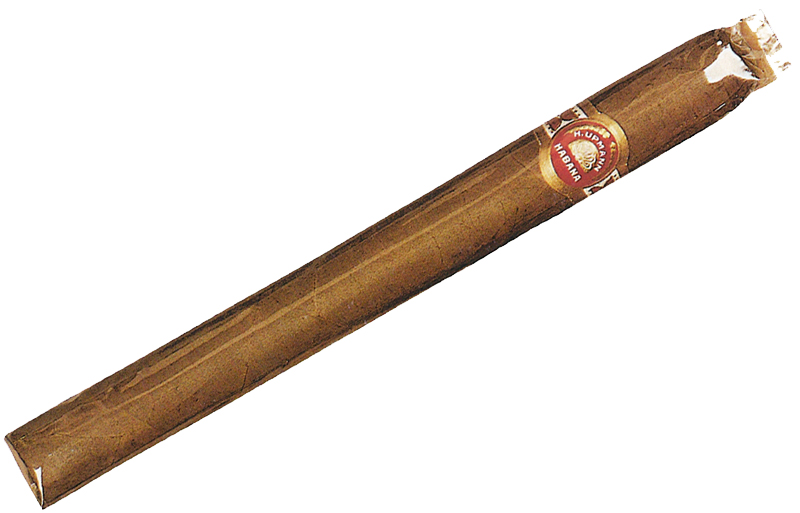
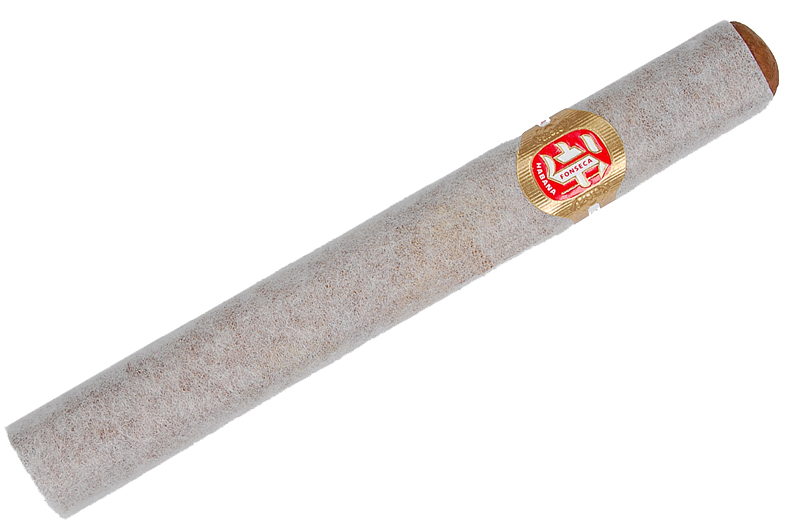
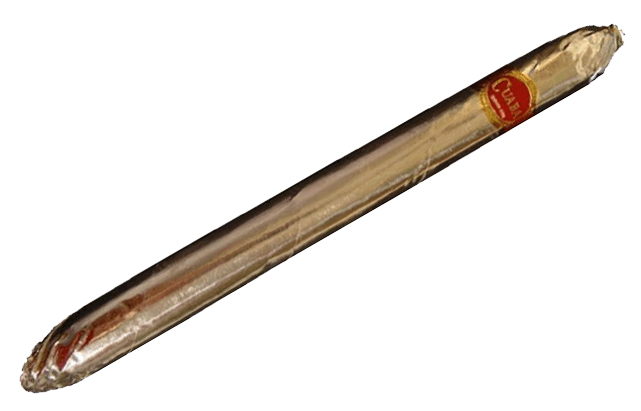
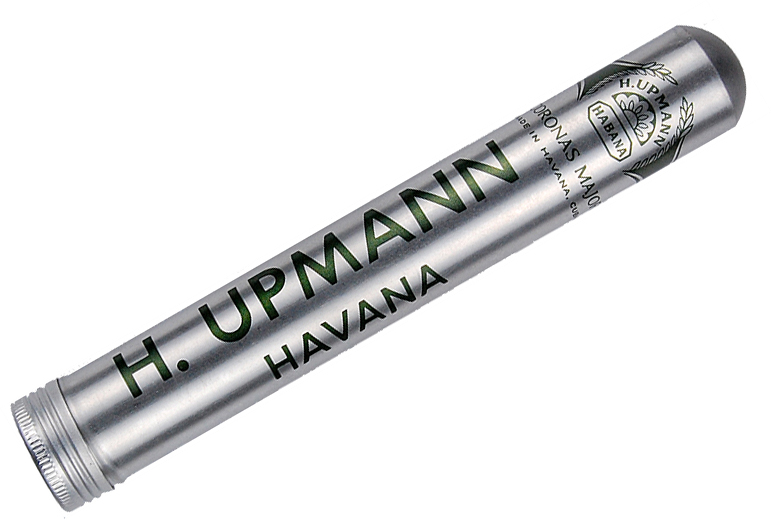
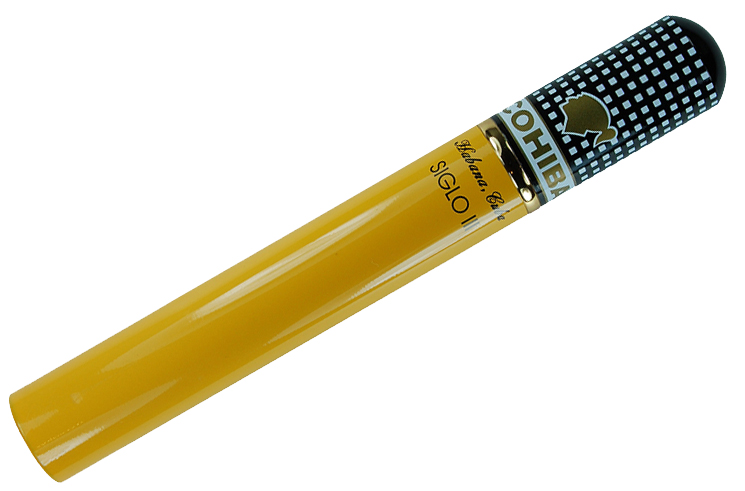
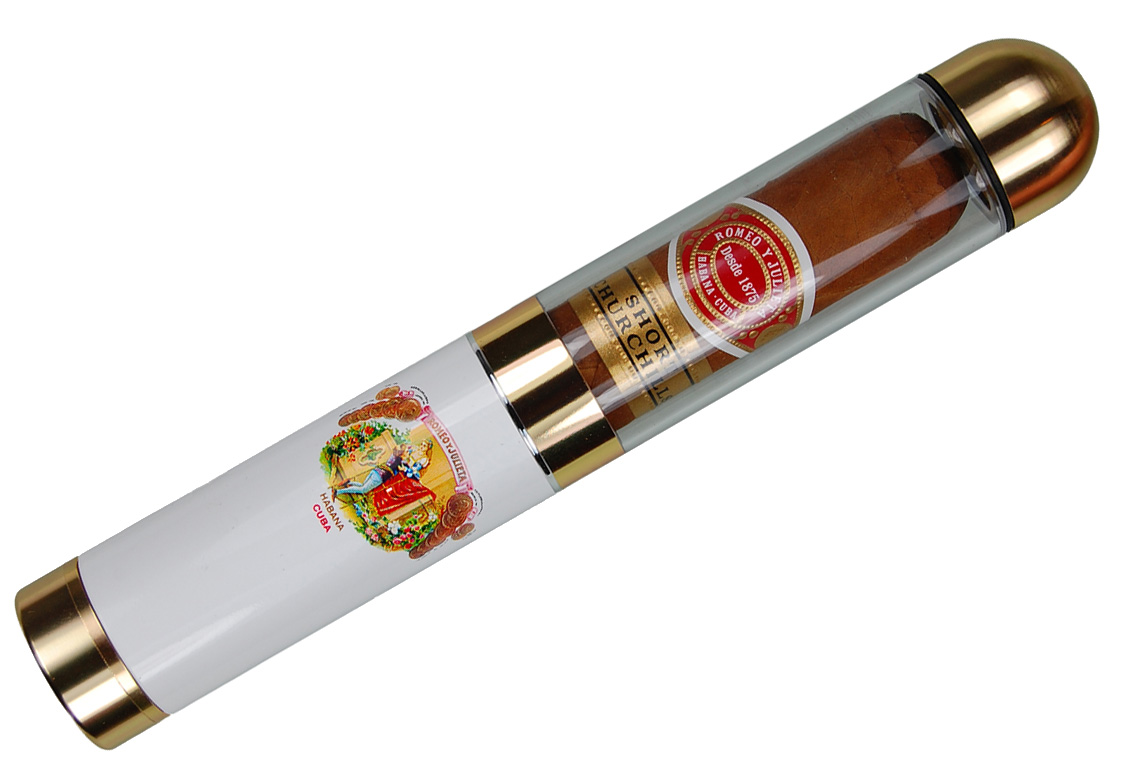
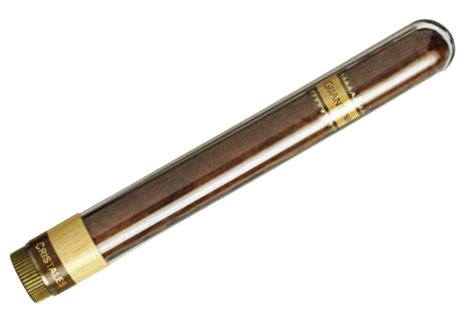
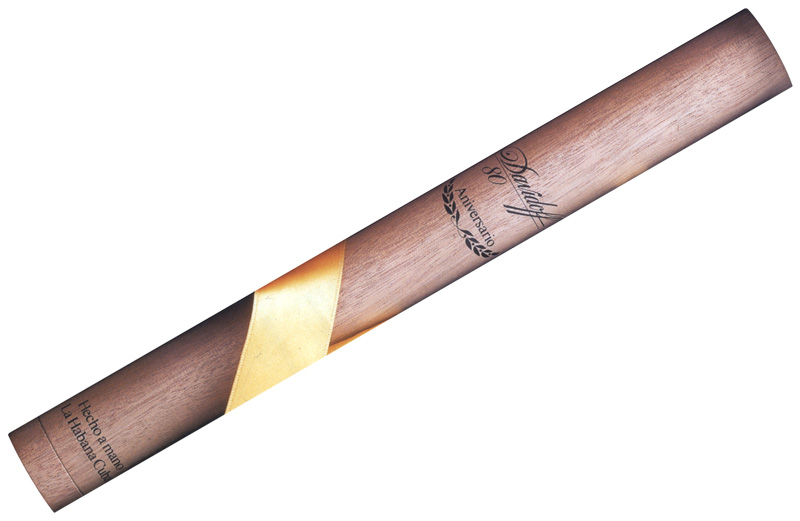
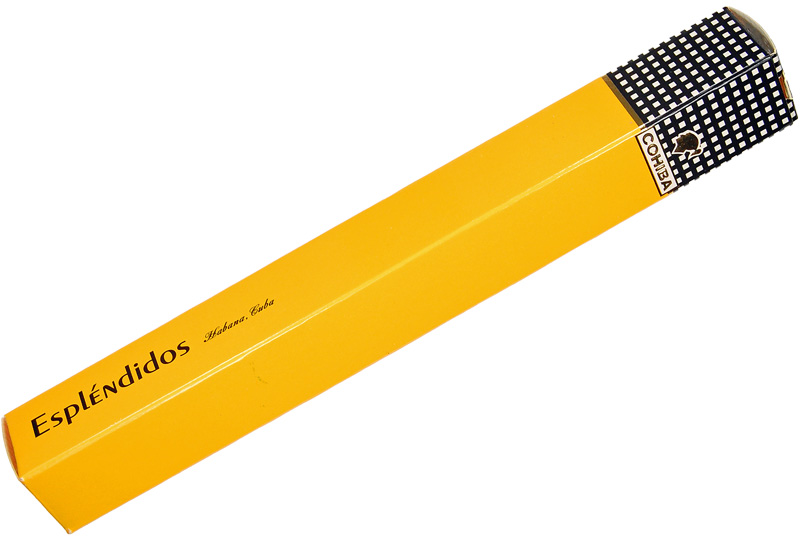
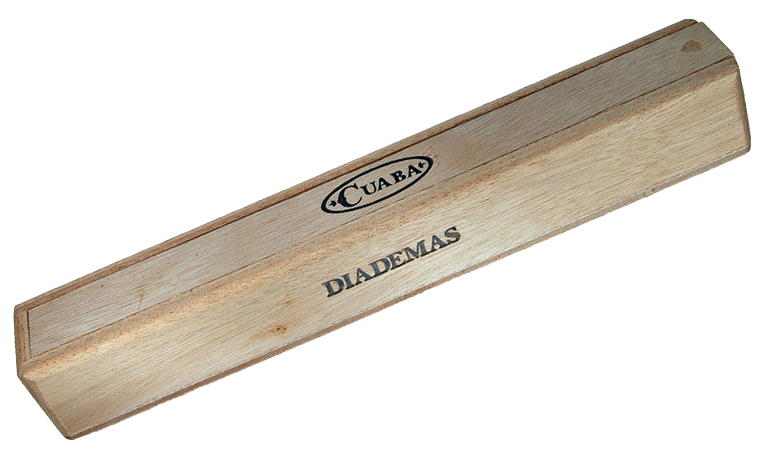
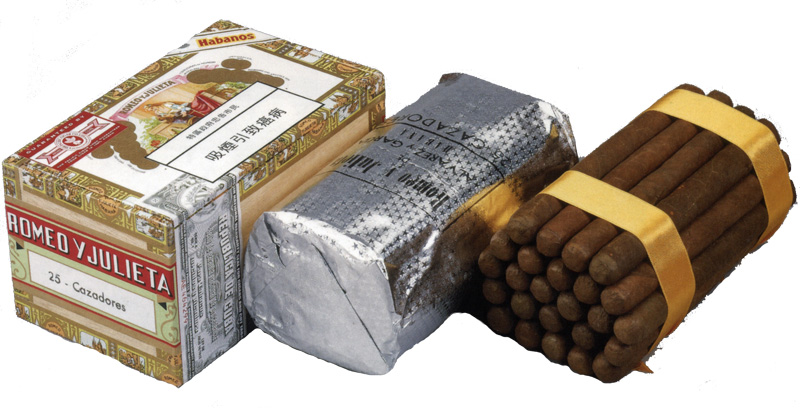
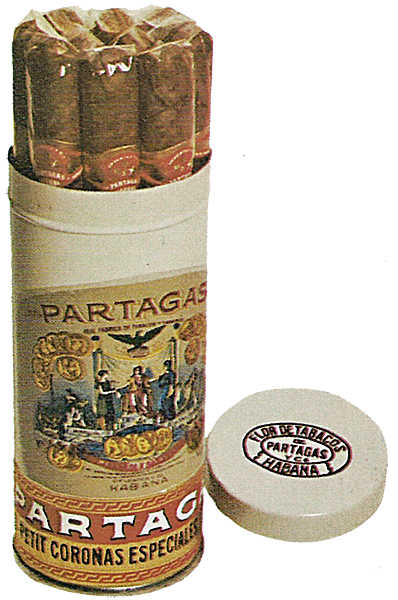
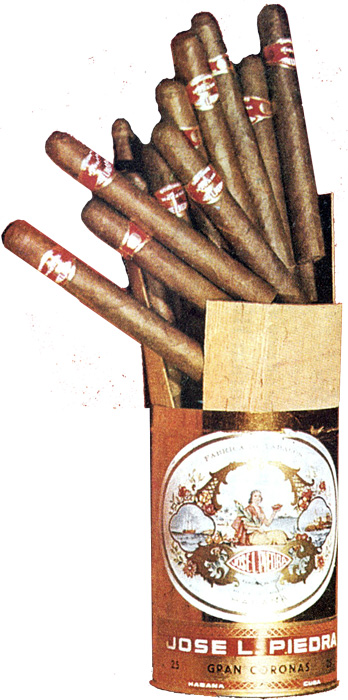
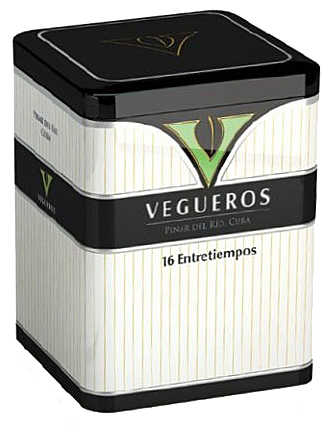
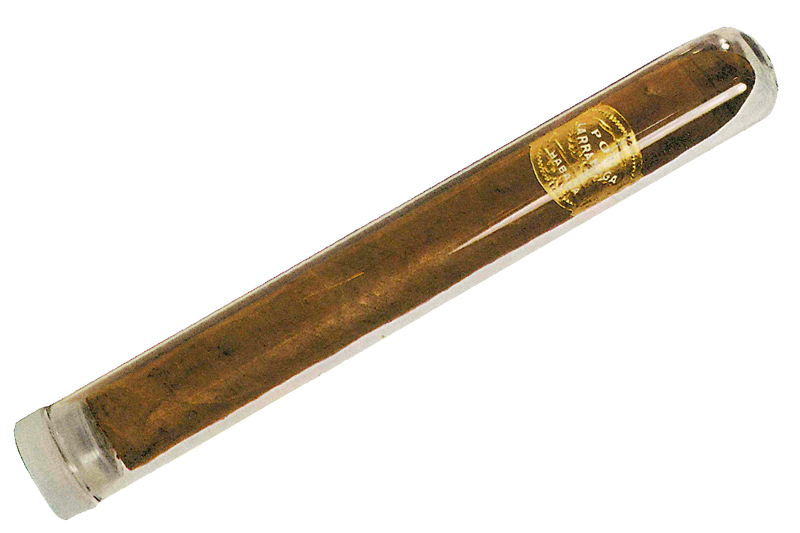
Individual cigars are finished (presented) in various ways: With Bands Since mid 2006, all Cuban cigars have bands (anillo's) applied. Limited and Special Releases usually have a second band. Commemorative issues may have a special band and/or a second band. On rare occasions, the bands may be individually numbered. Early bands for Machine-made cigars are imprinted Elaborado A Maquina. Without Bands Previously, un-banded Cuban cigars were limited to Slide Lid Boxes and Bundles. Between 2004 and 2006, this packaging can be found with or without bands. Un-banded cigars are no longer produced. Aluminium Tubes Some cigars are only available in aluminium tubes, while others are available either with or without tubes. Aluminium tubes have a thin cedar timber veneer lining. Tubes help preserve cigars from physical damage and short-term drying out. Habanos recommends removing the cigars from their tubes if storing in a humidor; but MRN recommends leaving cigars in their tubes for improved (but slower) aging. Since 2006, Habanos SA has been extending the available tube range in their major brands, using both the recoloured standard tubes and a new premium style tube. Some of the minor brands are having the tubes withdrawn. The standard tubes have a bottom screw-cap. The older style tubes have black text printed on the natural silver background; while the newer style tubes have the same screw-cap construction but with more colourful tube colour and printing. The new premium tubes have a twin tube construction, with top friction pull-apart section. They are usually print in multiple colours. Davidoff had a special multi-tube system with a long slot, that could be opened or closed by twisting the tube. This slot was intended to give the user humidity control by adjusting the slot width. Humidified Tubes In 2008 a super-premium Humidifier Tube was released for the Travel Retail Selection pack. It incorporates a rechargeable humidifier sponge within a double aluminium chamber and a clear plastic upper section, and a cap that incorporates a reusable cigar punch. Cedar Wrapped Cedar wrapping is intended to add a cedar aroma to the cigar. It provides some protection against physical damage. The cedar wrapping may be left on when storing in a humidor. Tissue Wrapped Only one brand is currently available tissue wrapped; the Fonseca. The wrapping adds nothing and provides negligible protection. The tissue may be left on the cigars in a humidor. It must be removed before smoking. Paper Foil This may be silver or gold coloured, and is currently used to fully or partially wrap some cigars, such as the Cuaba Diademas and the Bolivia Gold Medal. Paper foil has been used since 1980, when it replaced Aluminium Foil. Cellophane Sleeves In recent times, cellophane sleeves were only used with machine-made cigars. According to Habanos, almost all Cuban cigars were (in earlier times) available in cellophane sleeves. Other Types Some earlier cigars were available in Glass Tubes (discontinued mid 1970's), Aluminium Foil (discontinued c.1980), and more recently Plastic Tubes (discontinued 2005/6). |

|
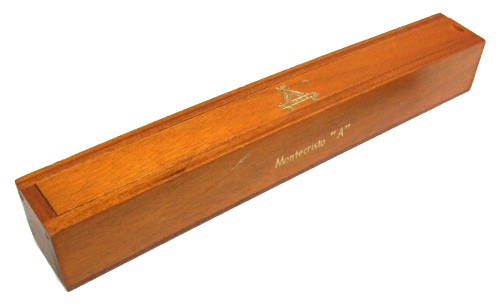
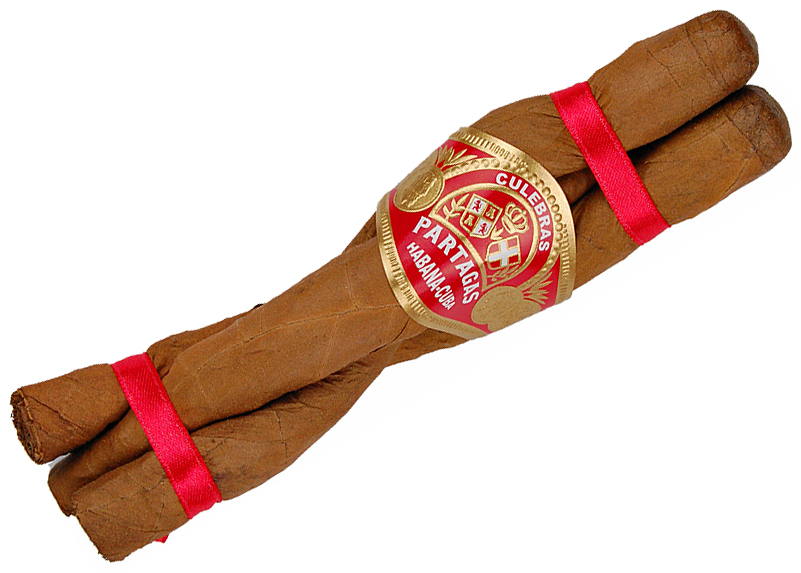
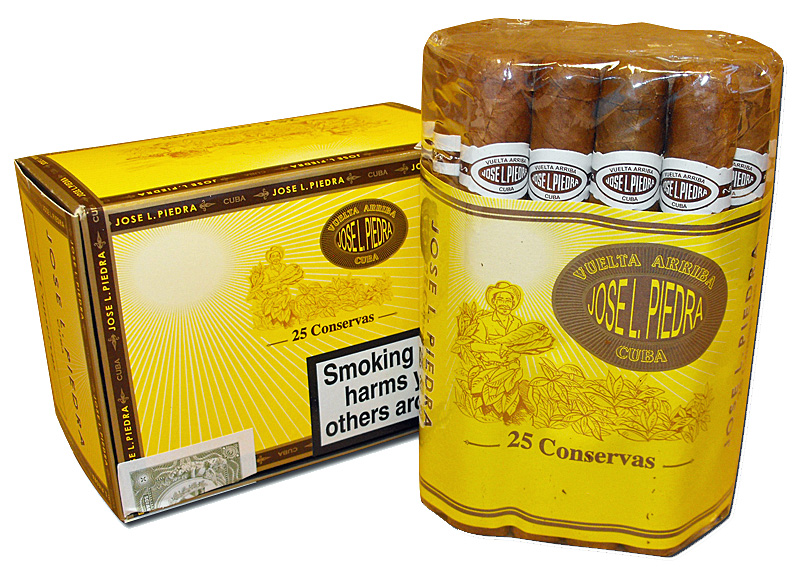
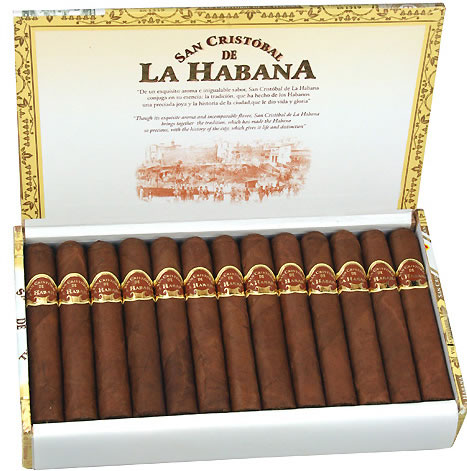
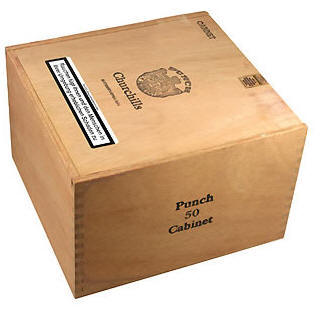
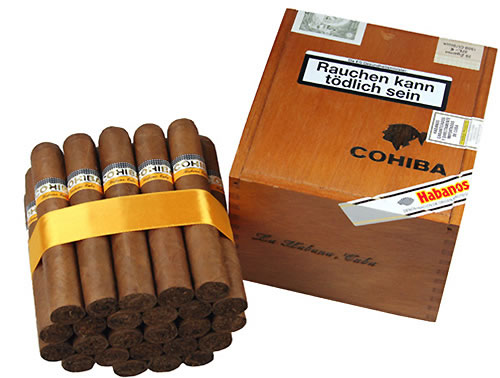
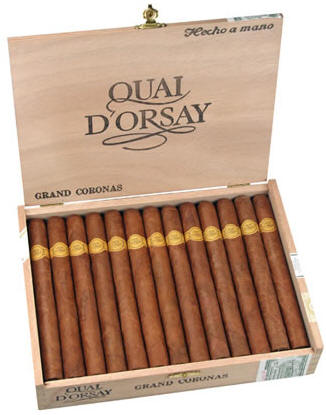
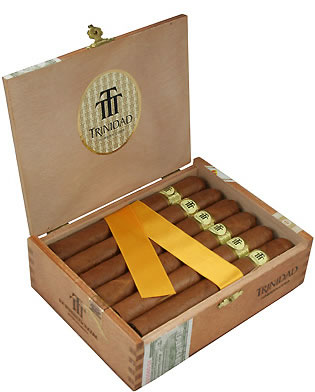
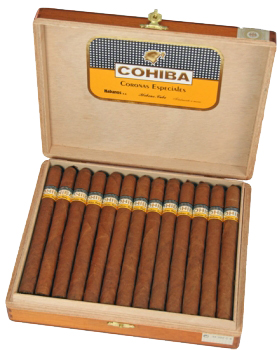
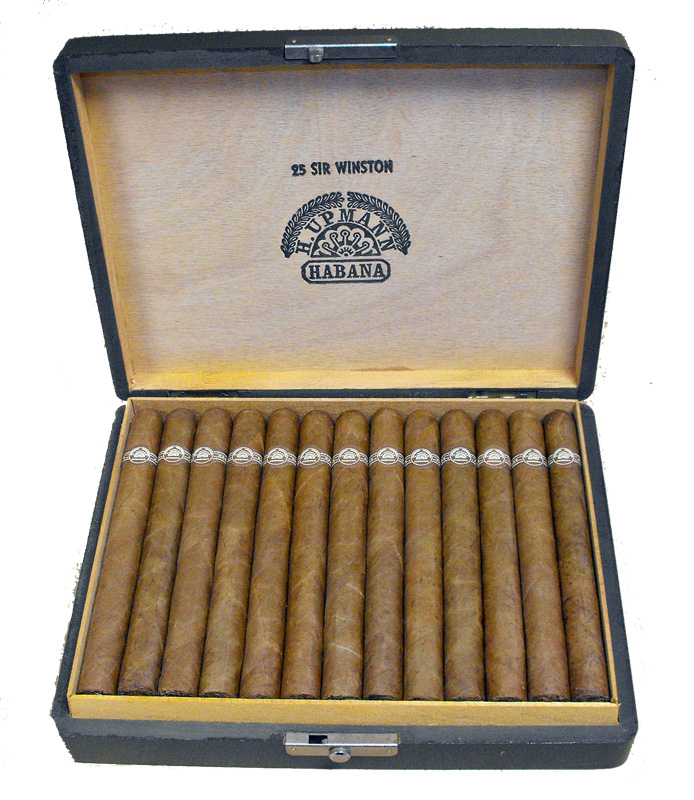
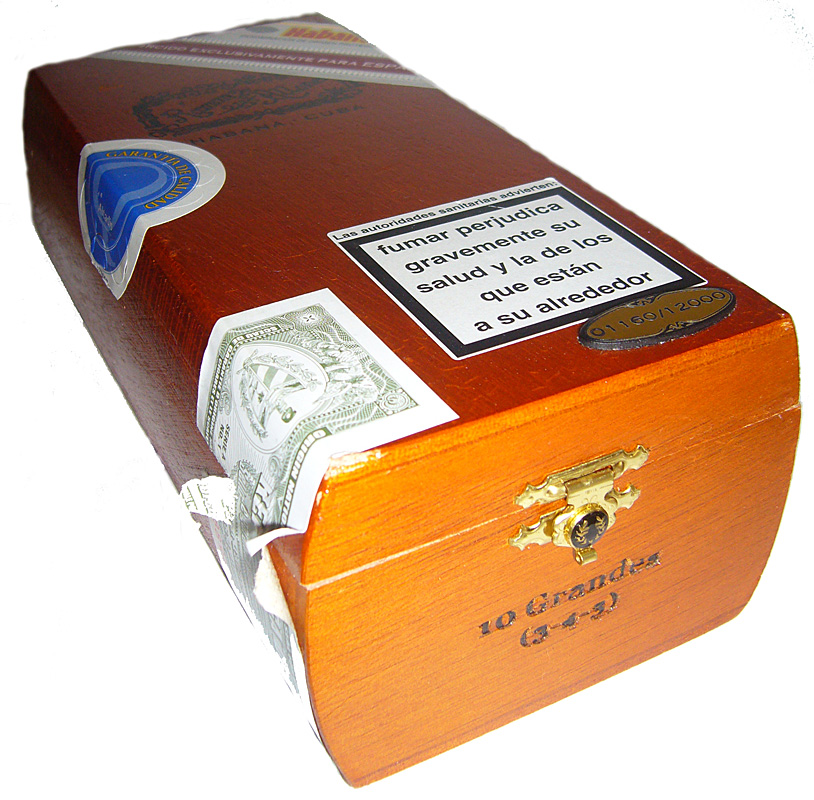
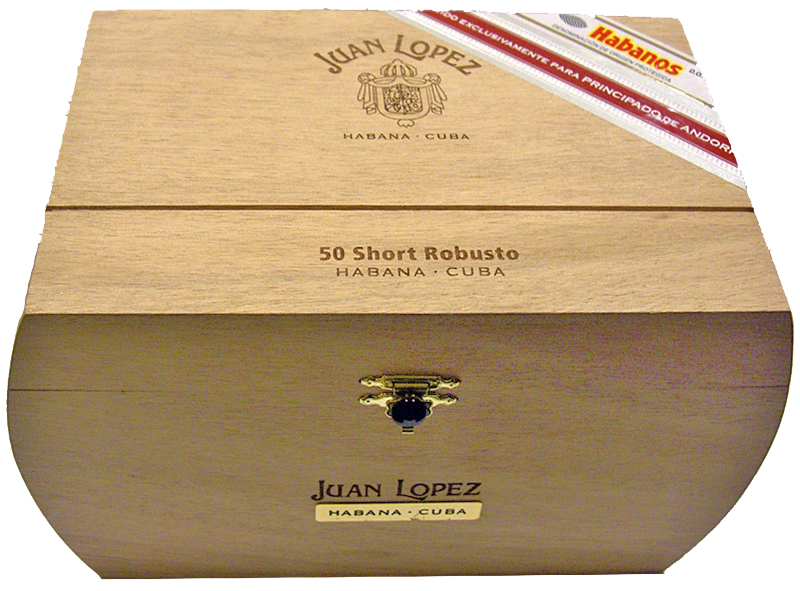
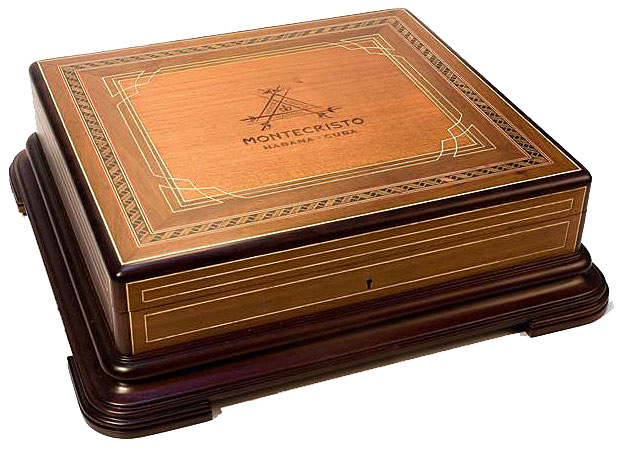
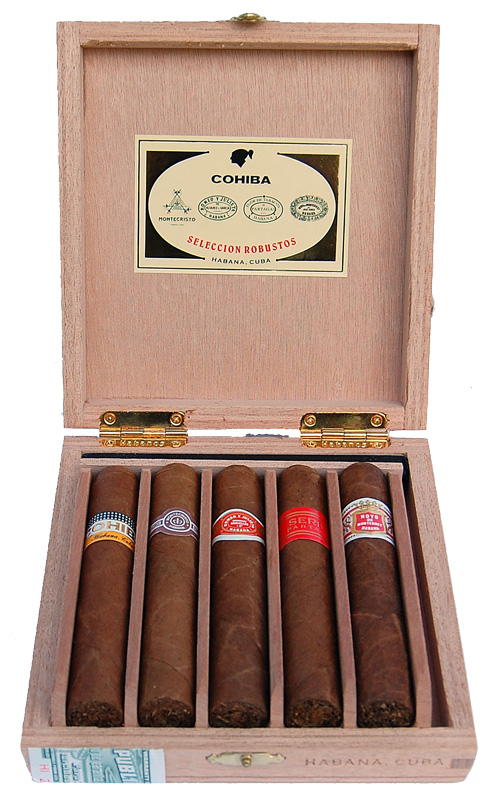
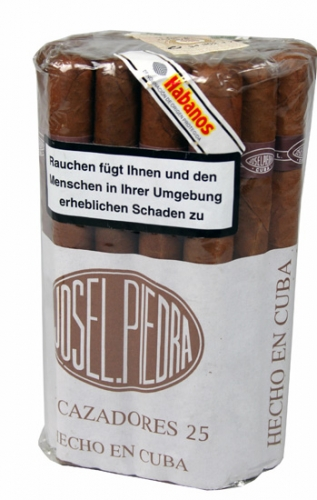
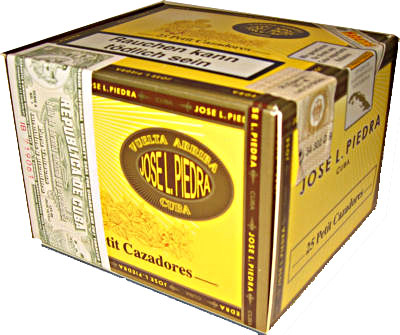
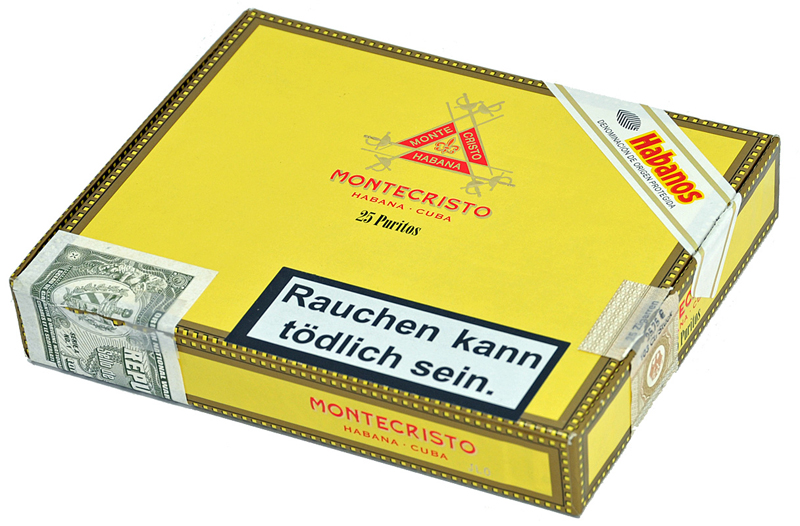
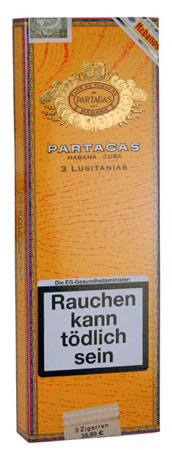
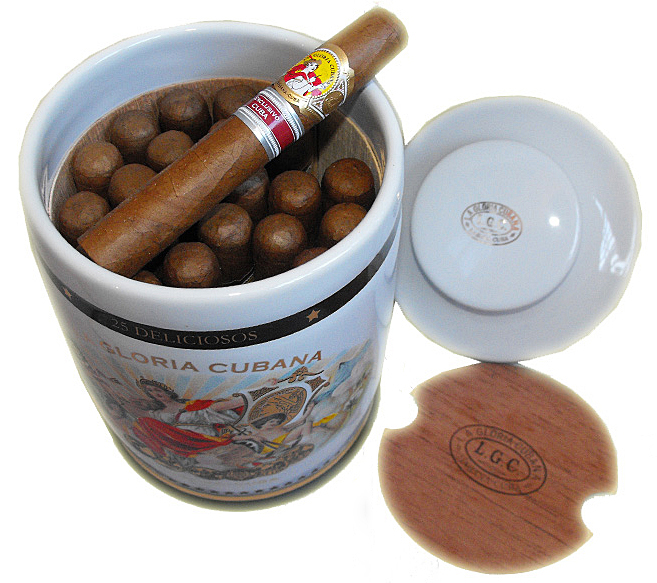
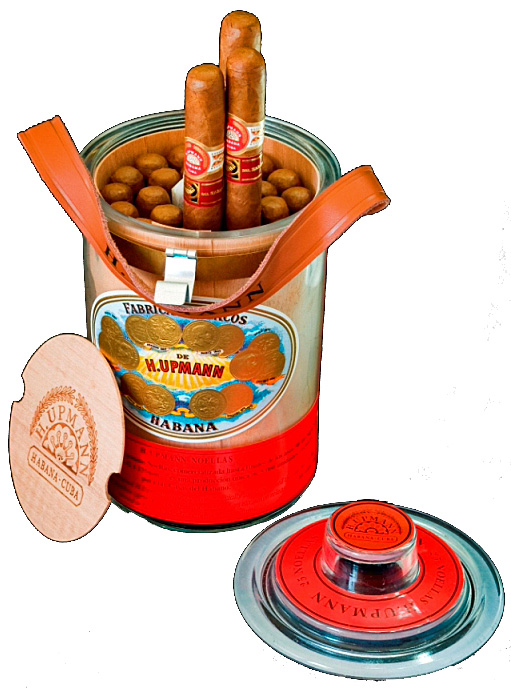
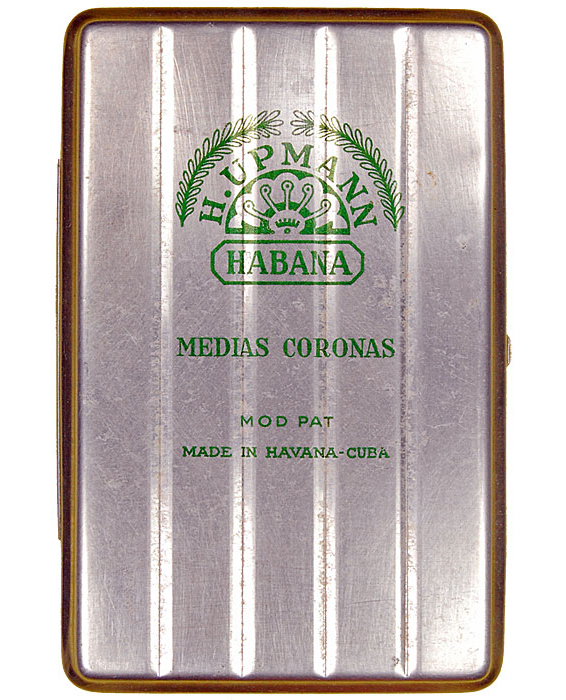
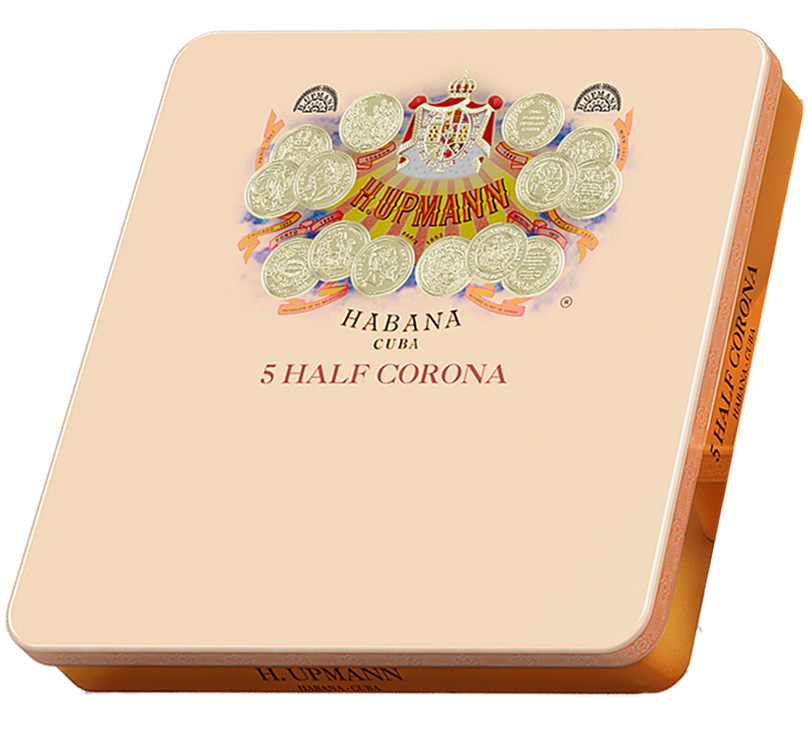
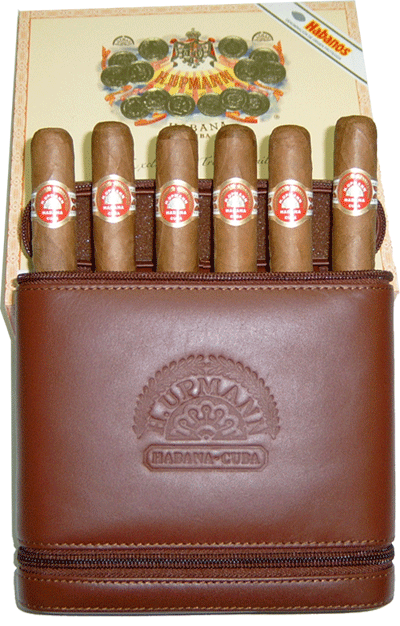
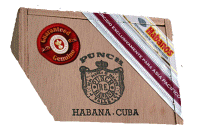
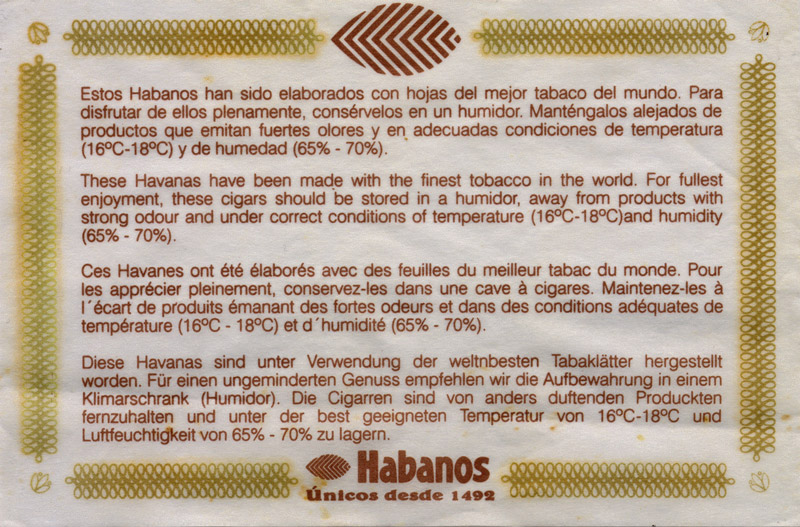
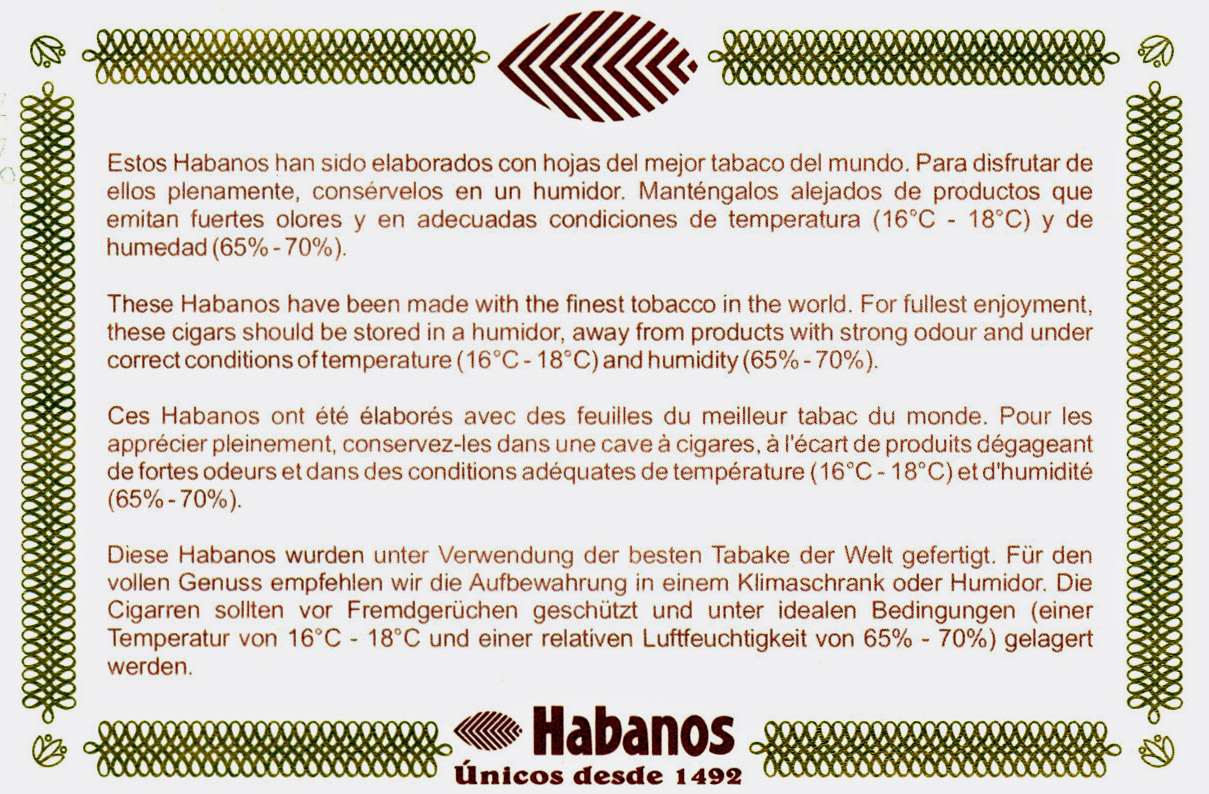
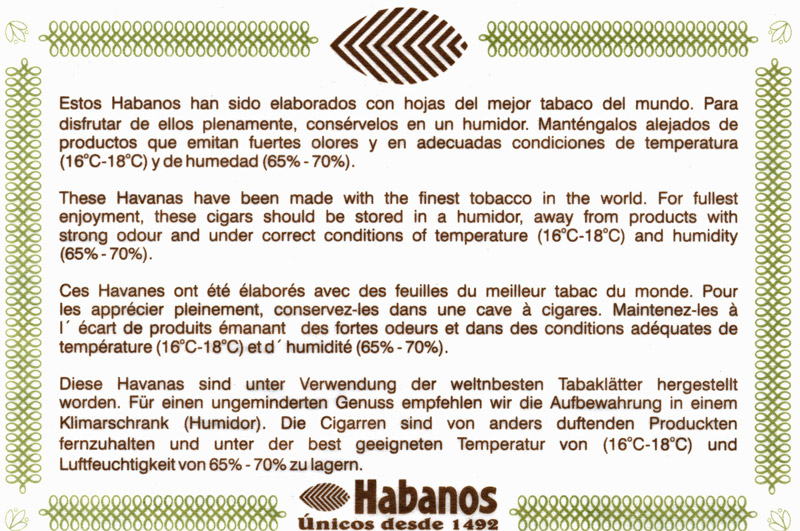
Cigars are packaged for sale in the various forms: Dress Box This is the standard cigar box. Also referred to as a current box, labeled box or semi-plain box (semi-plain more correctly applies to boxes pre-WW2, where the dressings did not cover the whole box). The standard dress box contains 25 banded cigars. The cigars are normally box pressed (the cigars are slightly flat on four sides) except for cedar-wrapped or tubed cigars. The box is "dressed" with specific paper labels and trimmings. Until the mid 1970's, the box is constructed from solid cedar, after which time it changed to cedar veneered plywood. The box is sealed using a pin / nail. Small Dress Box This is a smaller version of the dress box, usually containing 10 cigars. Slide Lid Box (SLB) Also referred to as a Cabinet. This is a varnished or unvarnished timber box containing 25 or 50 round cigars; packed in a bundle and tied with a silk ribbon, with cigars-bands since mid 2006. Around 1997, the timber changed from solid cedar to cedar veneered plywood. Semi Boite Nature (SBN) A varnished or unvarnished timber box containing 10, 24, 25, or 50 round cigars in layers. This box has a flat hinged lid (no sealing-collars) and is fitted with a clasp. Around 1997, the timber changed from solid cedar to cedar veneered plywood. Boite Nature (BN) A varnished cedar timber box normally containing 10 or 25 round cigars in one or more layers. This box has a formed hinged lid with projecting sealing-collars, and is fitted with a clasp. 8-9-8 Box A varnished cedar timber box with curved sides (on two sides) containing 25 round cigars, arranged in 3 layers of 8, 9, and 8 cigars. 3-4-3 Box A recent smaller version of the curve sided 8-9-8 box, containing 10 cigars, arranged in 3 layers of 3, 4, and 3 cigars. Single Box Also known as the coffin box. A varnished or unvarnished cedar timber SLB or SBN containing a single round cigar or a Culebras (three intertwined cigars). The single boxes are normally packed in a 3 or 5 pack dress or slide lid box. Usually reserved for expensive cigars. Bundles Bundles (Mazos) of 25 round cigars, with cigar-bands since mid 2006. Either wrapped in cellophane or silver paper foil. May be presented in a cardboard outer box. Normally used for cheaper (well selling) short filler cigars, such as Quintero. Cardboard Packs Cardboard Packs of 3 or 5 round cigars. Normally available as 5 Packs within an outer display box. This is a recently revived form of packaging (circa 2002). Used for small Packaging of premium cigars (including Cohiba) for affordability, but also for non-premium cigars for cheapness. Cardboard Packs existed pre-revolution but lapsed in the early 1970's. At the end of 2006, some of these packs were phased out. Special Packaging Special packaging takes many forms; from ceramic jars (the Millennium editions) to special individually made Boite Nature boxes (sometimes containing a small humidifier) with a varying number of cigars ( 5 in the Robusto & Pyramids collection, up to 30 in the Cohiba Select Reserve). Some releases take special forms, such as the Habanos Collection, which is presented in the form of a book. Occasionally a Cajon (large box) of 50 to 100 cigars is used. Special Humidors Special humidors can take many forms and are usually issued for a special occasion. They are normally limited in quantity, carry a premium price surcharge and may contain vitolas not in normal production. The cigars may have a special or an extra band. The humidors are usually numbered and (rarely) the bands may be numbered. Earlier Packaging Other earlier cigar packaging included: Cajon's of 50 or 100 (discontinued pre 1960), tin cans (discontinued mid 1960's), glass jars (discontinued mid 1970's), and aluminium packs (discontinued mid 1980's). There were also humidors of all forms e.g. tree branch's etc. Internal Notice Inside each box is a 104mm x 69mm advisory notice printed on a waxy paper, in Spanish, English, French, and German. Since circa 2005, a newer notice was used, correcting the spacing error (in the English section) after the (16°C-18°C) text. A further revision was released circa 2007 when the German & French texts were rewritten. The original German text had spelling and grammatical errors. Presumably the French text was changed for the same reason.

![]() |
|
Cuban cigar boxes produced since 1985 contain a coded date stamp. Prior to 1985, there was no official date identification on boxes (some dealers dated the boxes themselves, usually handwritten in pencil). These codes are ink stamped onto the bottom of the timber box or the cardboard outer packing, sometimes both. The imprinted dates are the dates that the cigars are packaged; not the date produced. It is not uncommon for discontinued cigars to be found with boxes dated one or two years latter than the official discontinued year. There have been three date systems used since 1985:
Original Date System (1985 to 1998) This is the so called "NIVELACUSO" code. Each of the 10 letters was given a number from 0 to 9 (starting at 1) as follows:
The code for each month is assigned to the number of the month, represented as 1 to 12 (1 or 2 digits). The year code is the last two digits of the year (in short year format, where 1985 is expressed as 85). The full date code is either 3 or 4 digits, with the month first and the year second (myy or mmyy) as follows:
Examples January 1985 is: NUL December 1998 is: NISU Transition Date System (1999) This is the so called "CODIGUNETA" code. Each of the 10 letters was given a number from 0 to 9 as follows:
However, while this system was intended to be a replacement for the original date system, it became only a transitional system. To further complicate this period, some factories (about half) only used this system from January 1999 to May 1999, and then used a fixed code system for the remaining seven months. This gives the following date codes for 1999:
Examples: January 1999 is: CCUN December 1999 is: CCNE or LROO depending on the factory of origin. Current Date System (2000 on) This is the current date system. Each month is given an alpha code based on the first three letters of the Spanish spelling of the month. The year is indicated by the last two digits of the year (in short year format, where 2006 is expressed as 06). The full date code is 5 digits with the month first & the year second (mmmyy) as follows.
Examples: January 2000 is: ENE00 December 2005 is: DIC05 |
|||||||||||||||||||||||||||||||||||||||||||||||||||||||||||||||||||||||||||||||||||||||||||||||||||||||||||||||||||||||||||||||||||||||||||||||||||||||||||||||||||||||||||||||||||||||||||||||||||||||||||||||||||||||||||||||||||||||||||||||||||||||
|
Cuban Cigar Boxes produced since 1985 contain a coded factory of origin stamp. Prior to 1985, there was no factory identification on boxes. These codes are ink stamped onto the bottom of the timber box or the cardboard outer packing, sometimes both. These codes are used for quality control purposes as in different years, numerous factories may make a particular brand or vitola. The codes keep changing to deter buyers from demanding or rejecting a particular factory as it went in or out of favour, as this causes stock problems for Habanos and their distributors. Factory codes normally comprise 3 capital letters, although some 2 & 4 letter codes exist. Up until about 2001, they were sometimes enclosed with a rectangle. There have been four code systems used since 1985, coinciding with the box date code changes, with the forth (and still unbreakable) code introduced in 2003. Details are as follows: First System (1985 to 1998) The first series of factory codes involved 2, 3 & 4 capital letters, was very simple, and often obvious (eg BM for the Romeo y Julieta Briones Montoto factory, FPG for the Partagas Francisco Perez German factory, and CFGS for the Quintero Cienfuegos 1 factory). In several provinces, all the factories use a common code (eg SS for the 10 factories in the Sancti Spiritus province). Second System (1998 to 1999) The second series of factory codes involved 3 capital letters, was less obvious, and the factories were all given separate codes. As in the above examples, BM became EDC, FPG became EAT, CFGS became OTC, and the 10 SS province factories were given separate codes. Third System (2000 to 2003) The third series of factory codes involved 3 & 4 capital letters, changed the main codes again, and introduced another system for the provinces; where each province shared a group of codes. The failure of this system lead to the current system. Fourth & Current System (2003 on) With this system of factory codes, all factories have an unique 3 capital letter code that can be changed monthly and yearly. With this system there are a substantial number of unique codes available, which means there need not be a duplicate code for many years. Consequently identifying and tracking them is virtually impossible. Only those with access to the code generator program would know codes in advance. Occasionally a code may be reported but even if correct, it is of limited use as it may only be valid for short time. Given the much improved quality control from 2005/6 on, the difference in factory output is reduced, making it less important to "chase factories". In addition, the rationalisation, improvement, and replacement of factories means that most brands are now being made in a single factory. For more information about factories.....click here. |
|
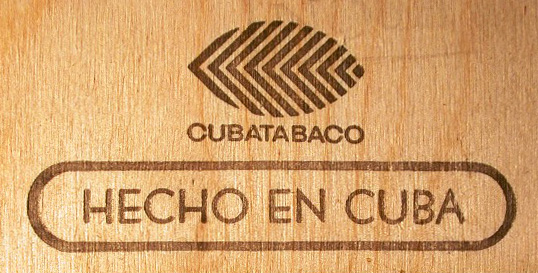
In addition to the box date codes and factory codes, Cuban cigar boxes have other box stamps. These are impact stamped onto the box and some indentation should be evident. Producers Name Between 1985 and 1994 "Cubatobacco"
was the authority responsible for the production of Cuban cigars.
They used a stylised
tobacco leaf logo above the word. This leaf symbol was later
incorporated into the Habanos box sticker (see below).Country of Manufacture
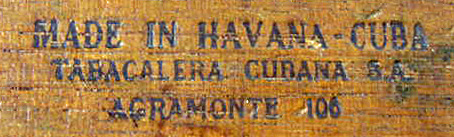
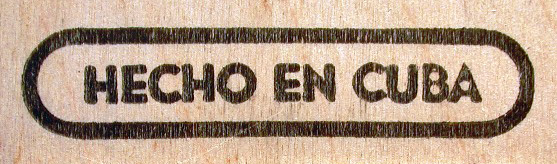
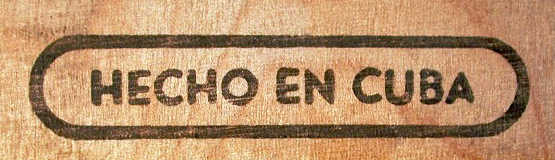
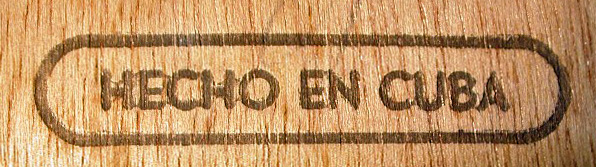
Pre-revolutionary (1960) boxes were all stamped: "MADE IN HAVANA-CUBA" in English. Handmade Cigars
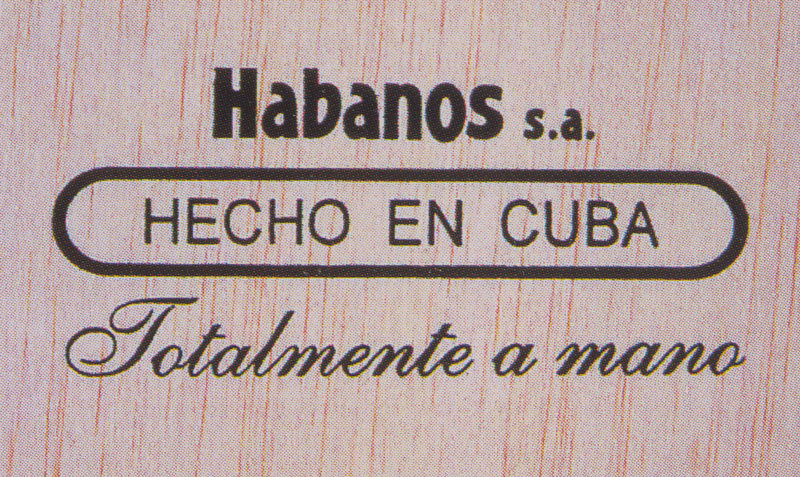
Since 1989, boxes of premium handmade long filler (Tripa Larga)
cigars have the inscription Totalmente a mano, meaning "totally by hand.Short Filler Cigars
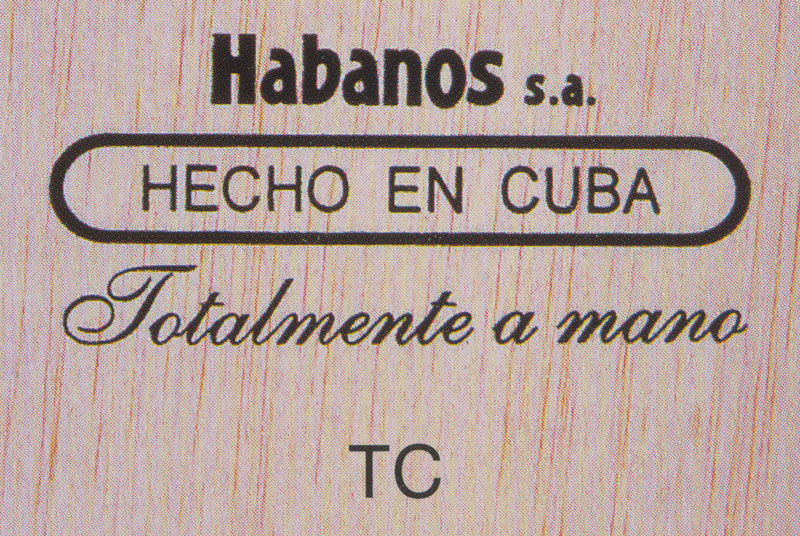
Since circa 2002, boxes of handmade short filler (Tripa
Corta) cigars are identified by TC being ink printed below the
Totalmente a mano inscription, however boxes of short filler cigars
have been found without this stamp (either old box stock
or manufacturing error).Machine-bunched Hand-finished Cigars
The practice of hand finishing machine-bunched cigars was reduced in the 1990's and fully
discontinued by c.2002. Machine-made hand finished cigars also used the Totalmente a mano
inscription.Fully Machine-made Cigars
Fully machine made (Mecanizado) cigars usually have no third inscription, except that an
inscription "Envuelto a Mano" has been reported, meaning that the cigars were
placed, packed, and wrapped by hand.No longer produced by Habanos. |
This section covers box seals that are applied by Habanos before the
boxes leave the factory.
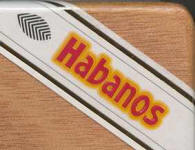
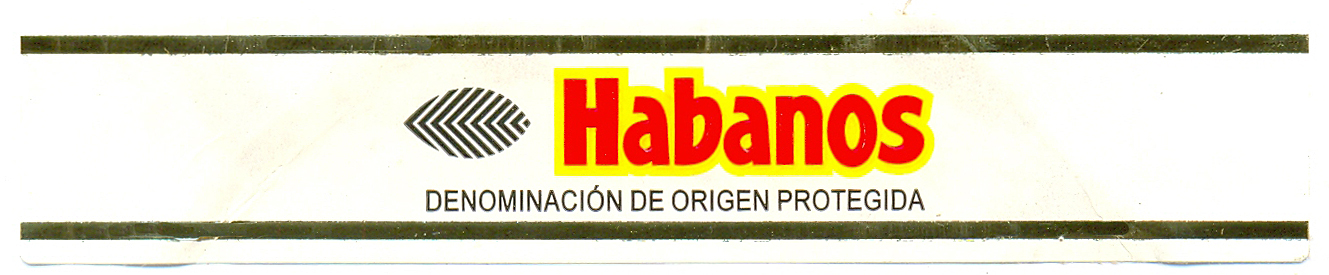
The Habanos seal has been used since 1994 . The seals are typically affixed to the top right-hand corner of the box. The appear to be two types of seal. Both seals fluoresces under ultra-violet black light. Box Seal - Original Type 1994 to 2004 Type 1 is a self-adhesive, rectangular 102 mm x 20 mm seal. It comprises a white seal with full length gold line top & bottom; the leaf emblem and a second thin line in black; and the word "Habanos" is in red and is embossed?, and has a yellow shadow background. ![]() Box Seal - Second Type 2005 on - Current Type 2 is a self-adhesive rectangular seal. It comprises a white seal with single full length gold line top & bottom; the leaf emblem and the text "Denominación de Origen Protegida" in black; and the word "Habanos" is embossed, and is red and has a yellow shadow background. The are two sizes; 107 mm x 21 mm for boxes, and 60 x 20 for small packs. ![]() Box Seal - Limited & Regional Editions Limited Edition and Regional Edition boxes have a second seal set below the white Habanos seal.
|
|
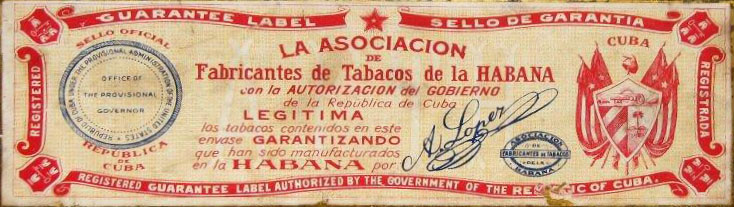
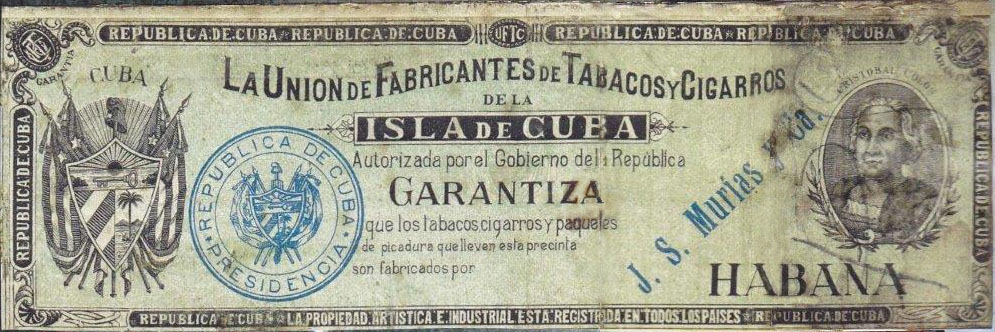
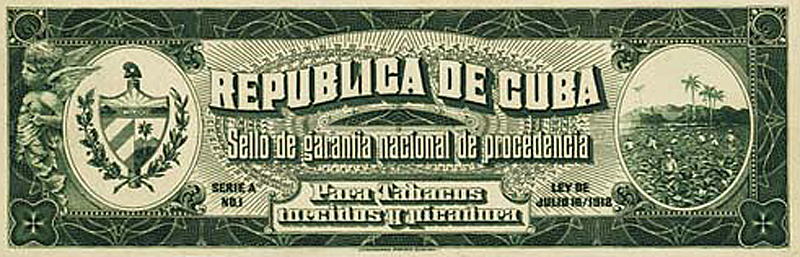
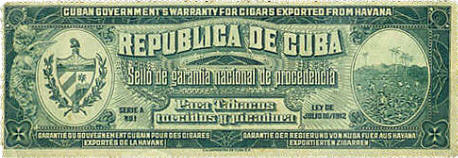
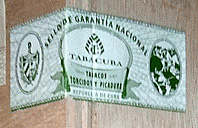
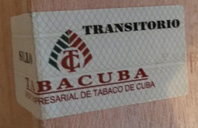
The warranty seal was first introduced on 13th February 1889 by Royal Decree of the King of Spain to be used by the manufacturers (Union de Fabricantes de Tabaco). The first two seals are strictly called Union Seals. In 1912 the Cuban Government authorised a new design, that was modified in 1931, again in 1999, and now in 2008. Warranty Seal - 1889 to 1902 This warranty seal was introduced in 1889 when Cuba was still under Spanish control. This seal had a portrait of Christopher Columbus on the right, and the Coat of Arms of Spain and Habana on the left, and was was used until 1902. Each factory printed their name across the face of the seal. An image is available at: http://www.nationalcigarmuseum.com/Dating/Dating_Cuban_Boxes.html Warranty Seal - 1902 to 1912 This warranty seal was introduced in 1902 when Cuba obtained its independence from Spain. This seal was in use until 1912.It is a modification of the earlier seal. The Spanish Coat of Arms replaced by the Republic of Cuba Coat of Arms and Seal; and is no longer over-printed with the factory name. Warranty Seal - 1912 to 1931 This seal was introduced on 16 July 1912 by the new
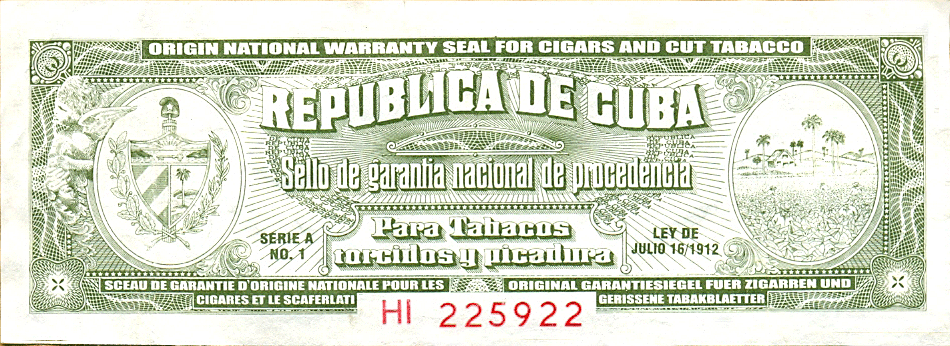
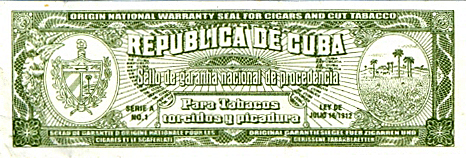
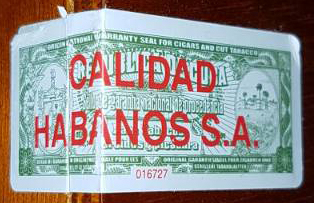
independent Cuban Government. This seal was used until 1931.It has a simplified Cuban Coat of Arms, and a scene of a tobacco field in lieu of the Christopher Columbus portrait. Warranty Seal - 1931 to 1999 This seal was a modification of the previous seal and was used between 1931 and 1998.It was printed in four languages with green ink (shades) on a white paper, in 3 known sizes (± 1mm): 182mm x 62mm & 97mm x 33mm for boxes, and 60mm x 20mm for cardboard packaging. The box seals were glued and the pack seals were self-adhesive. Warranty Seal - 1999 to 2009 This seal was introduced in late 1999. It was a major modification of the previous seal and incorporated more security features. There are two sizes (148mm x 49mm for boxes and 60mm x 20mm for cardboard packs). The smaller seal has no serial number. The seals are manufactured with better quality self-adhesive
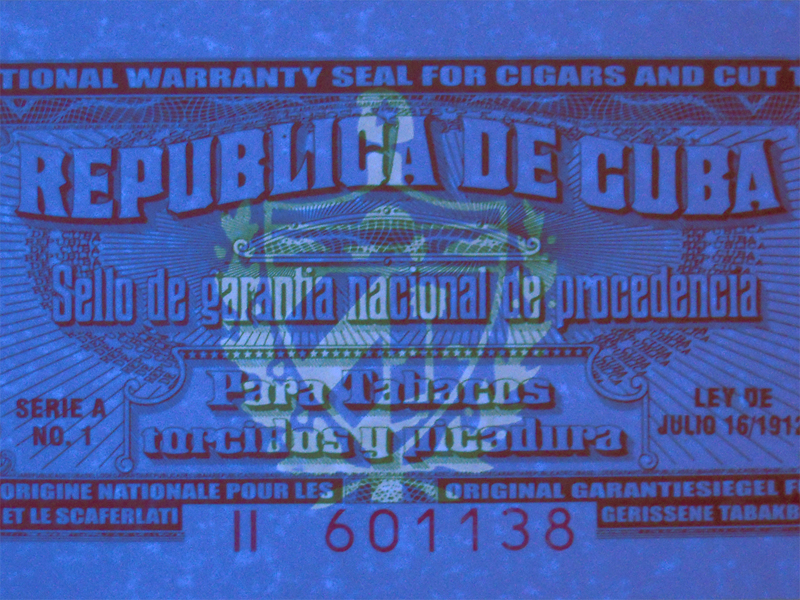
paper (two types of paper), micro-printing, a hidden ultra violet shield (two types), with the box seal bearing a unique serial number printed in red ink, that has different reactions under UV light. Currently there are several known variations of this seal. A. Darker green shade of ink, printed on bright white paper, providing a good contrast. Under UV light: the paper fluoresces, a poorly defined pinkish-orange coloured shield appears, and the whole serial number appears a very dark black-red. The micro printing is present in 2 locations; towards the top just above the "Republic de Cuba" text and near the bottom below the "torcidos y picadura" text. The micro printing consists of "SELLO DE GARANTIA REPUBLICA DE CUBA" repeated across the seal between the two scrolls. This is not readable to the naked eye and is not overly distinct or clear under magnification, due to the printing process. The serial number consists of two letters and six numbers, and the first letter of the Serial Number "should" correspond with the following box date code. The second letter appears to be somewhat random. Any serial number on the warranty seal commencing with XX or XY has been opened and inspected at the Habanos SA facility as part of their quality control and these boxes may have a "REVISADO" (reviewed) stamp on the base of the box.
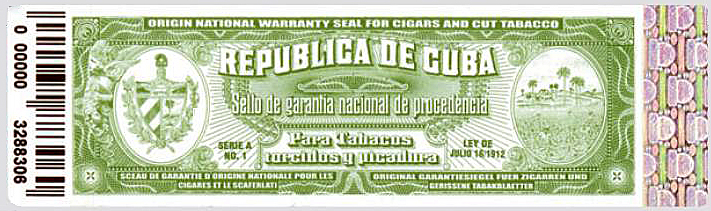
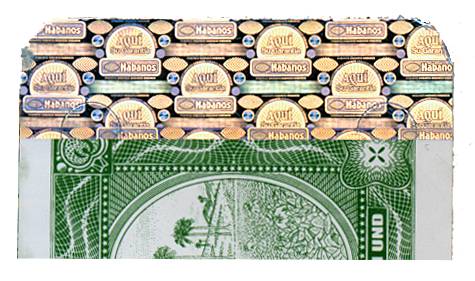
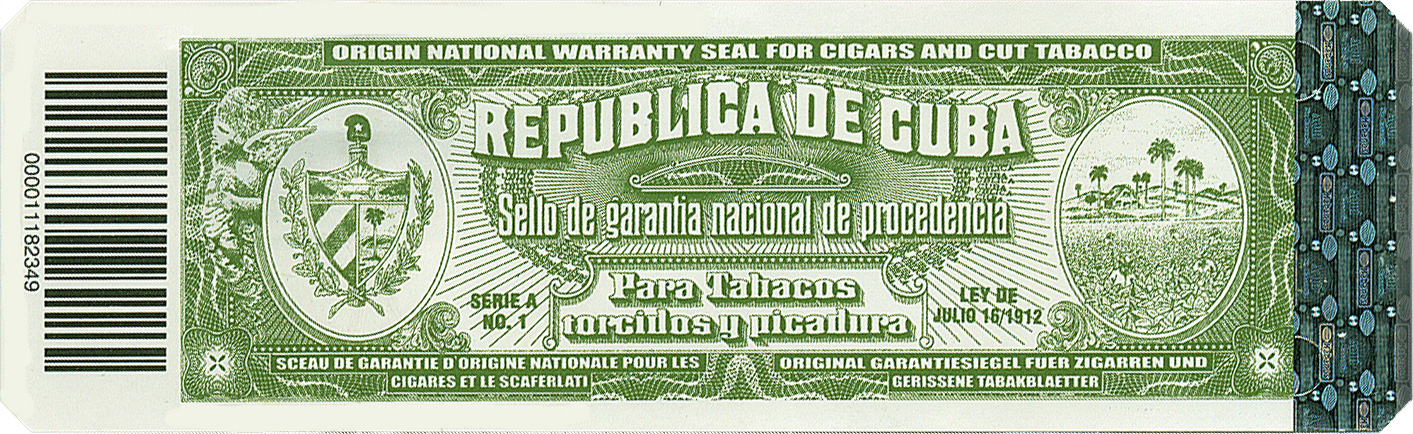
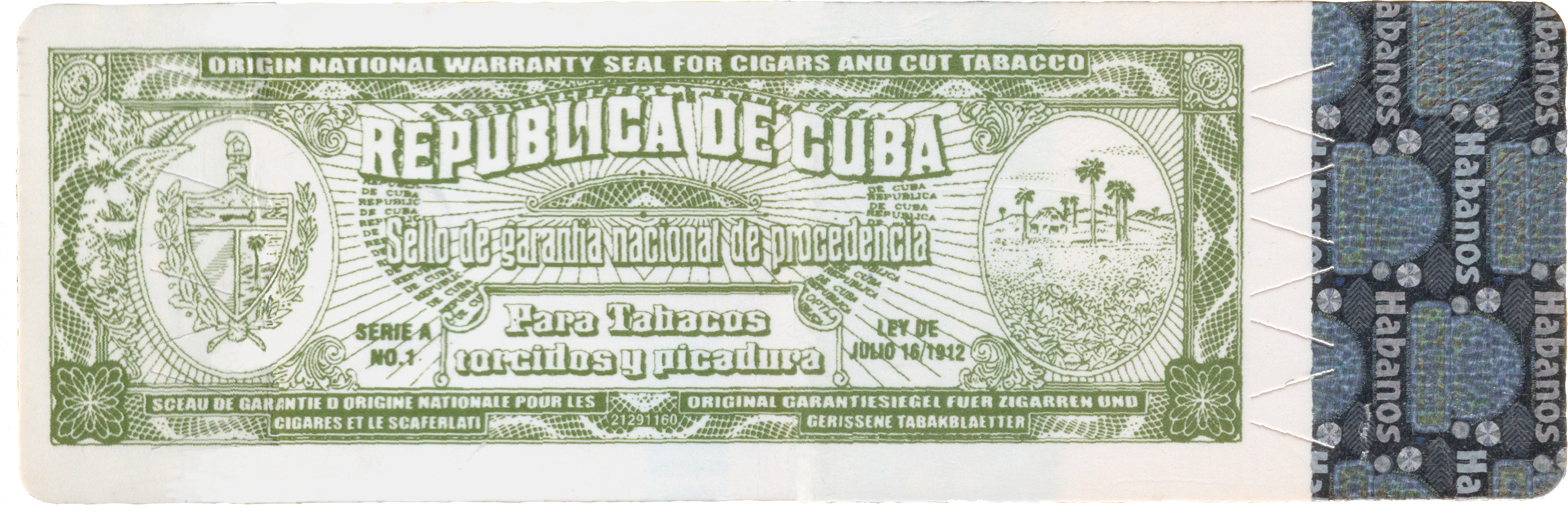
Warranty Seal - 2009 on (current) In 2009 Habanos SA commenced the introduction of a seal with
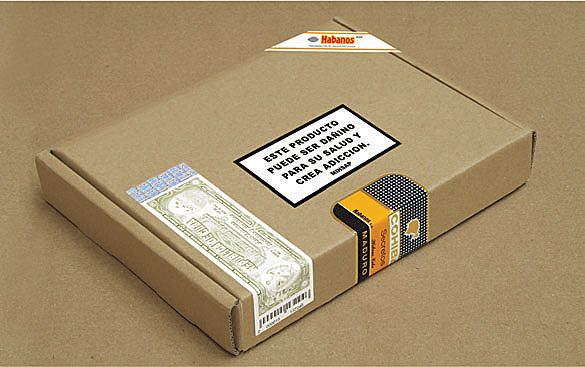
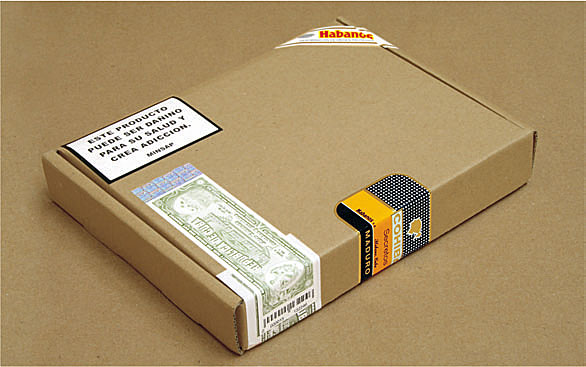
more security features. There are two sizes of seals: a 118mm x 35mm for dress boxes, cabinets etc and a 58mm x 20mm seal for carton packs. Both new seals incorporate a hologram and the larger seal has a serialised barcode in lieu of the previous serial number. The smaller seal has no barcode (or serial number).The seals are printed on a synthetic paper that is destroyed on removal. It incorporates a scan and photocopy protection system (presumably micro printing). The hologram displays a bicolour text (text unknown at this stage). Warranty Seal - Placement Seals up to 2009. Until 2009 seals are normally located on the left-hand side of the opening side of the box. It is positioned so that the fold is through the centre of the coat of arms. If the cigar box comes packed inside an cardboard outer carton, the warranty seal is normally adhered to the carton box only. ![]() Seals from 2009. The new seals will also be placed with the fold through the centre of the coat of arms, but with the barcode showing at the front of the box, resulting in the seal being fixed in reverse of the previous seals. There will be a transition period when both new & old seal may be affixed. ![]() ![]() |
||||||||||||||||||||||||||
|
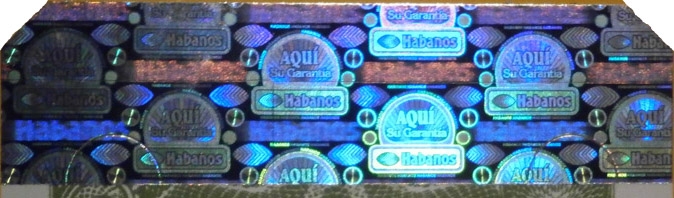
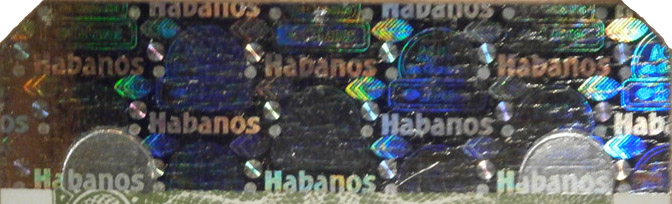
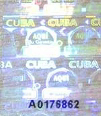
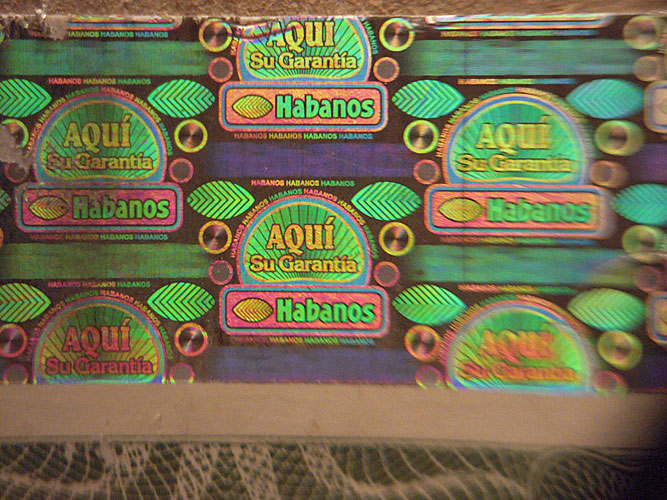
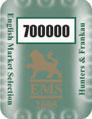
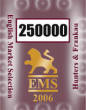
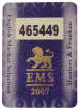
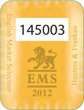
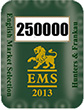
These are stickers applied by the Regional Distributors before being sent to retailers. Government Health Warning Stickers These are placed on boxes by the regional distributors to comply with local anti-smoking laws. Logos and other Duty Paid Stickers These include stickers applied by some distributors to authenticate their point-of-distribution origin. In some countries, a duty paid sticker is also applied. Cuba Habanos cigars produced for sale within Cuba have a exclusive hologram on the boxes. Only Habanos SA approved retailers in Cuba sell boxes of Cuban cigars with this hologram. Boxes produced for export do not have the hologram. The sticker is a transparent hologram with a serial number printed on it. ![]() United Kingdom UK Distributors, Hunters & Frankau, resurrected the old EMS (English market selection) sticker in 1993 and applied it to cigar boxes after clearing bond by the payment of the duty and excise.
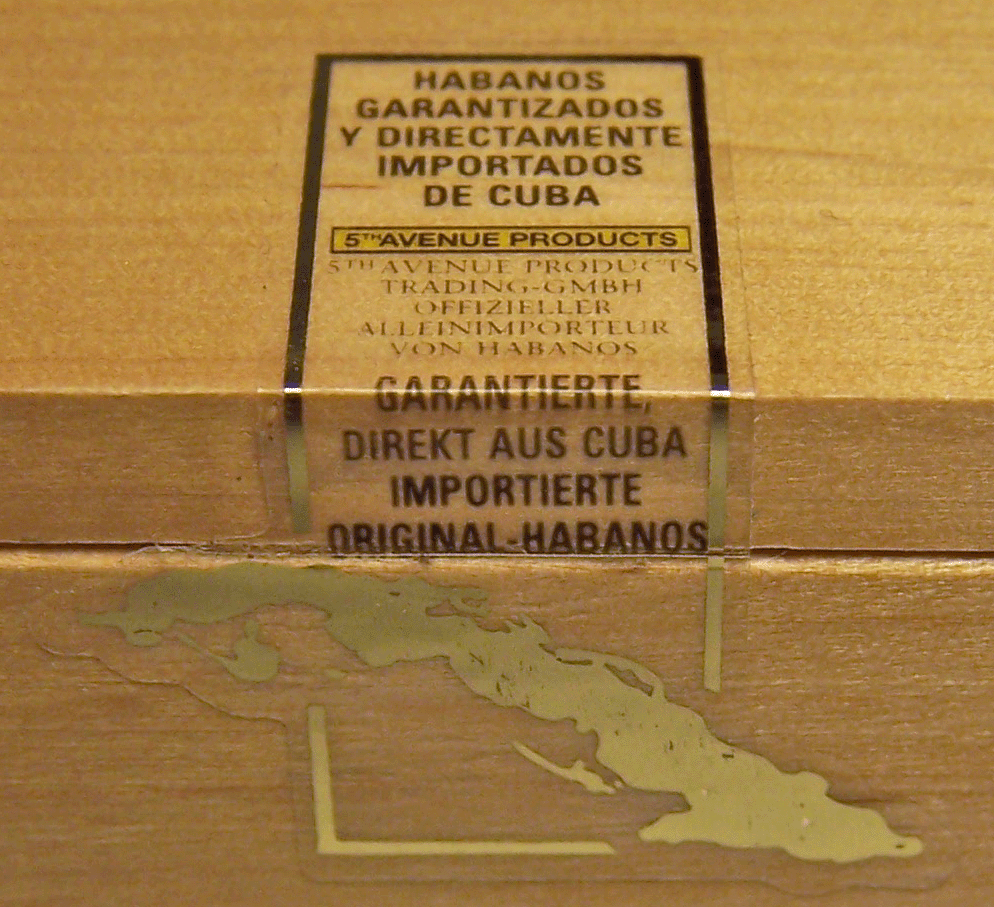
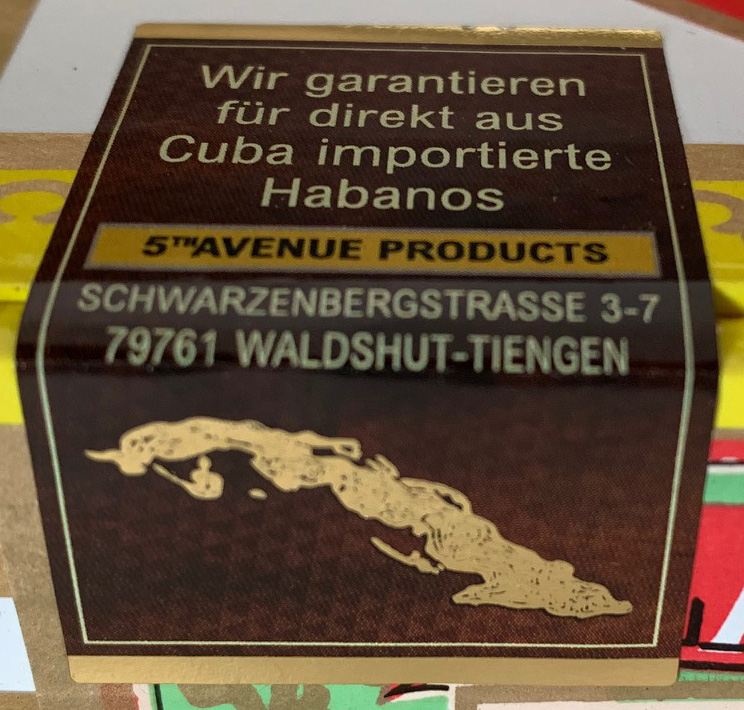
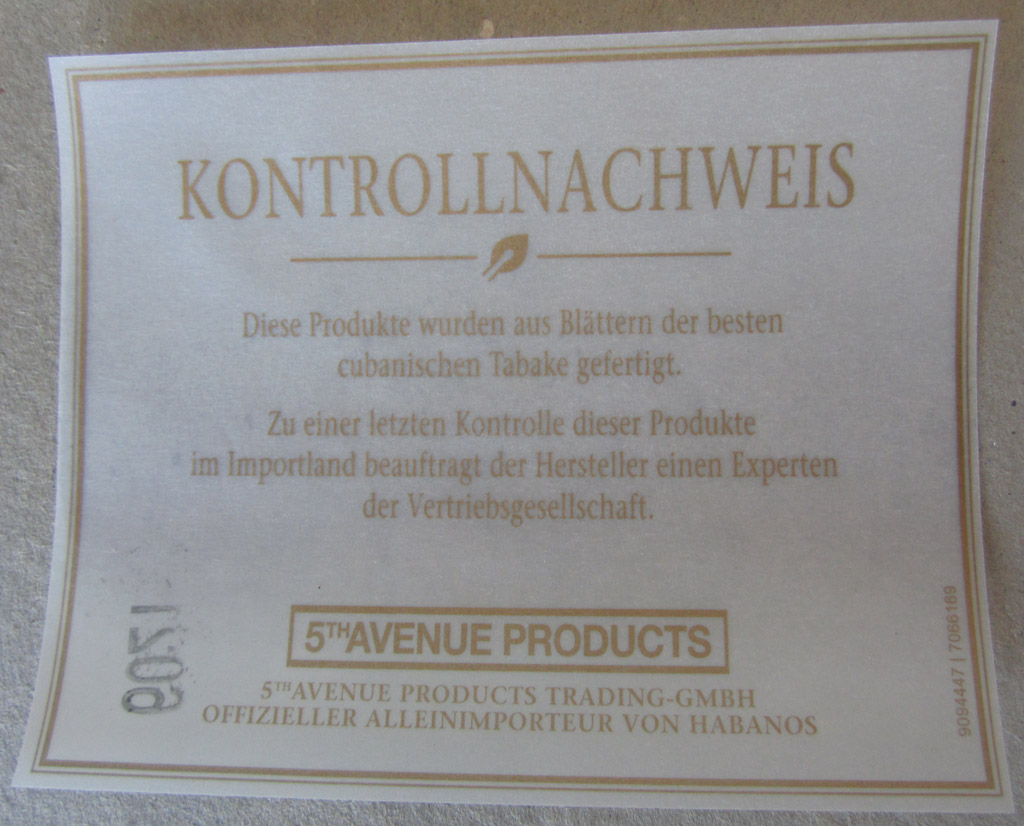
![]() UK Travel Retail, Republic of Ireland, Gibraltar and the Channel Islands For boxes of Havana cigars sold unopened by Hunters & Frankau, a "H & F Imported Directly from Cuba" sticker is used. These stamps are applied to all boxes for UK Travel Retail and the Hunters & Frankau export markets (Republic of Ireland, Gibraltar and the Channel Islands). ![]() Germany German Distributors, Fifth Avenue, apply a logo and a government duty sticker. Old style and new style shown.
![]() |
|
On the Habanos SA website, a special packaging code is used to describe the Packaging available for each vitola. The packaging code is made up of 6 parts, each part separated by a hyphen (-) symbol.
This (roughly) works out as:
Note: "n" does not mean number.....it means nada, nothing, not applicable. The codes in each part are:
|
||||||||||||||||||||||||||||||||||||||||||||||||||||||||||||||||||||||||||||||||||